
The Myth of “Non-Essential”
Nutrition textbooks divide amino acids into two neat categories: “essential” ones we must consume, and “non-essential” ones our bodies can supposedly make. Glycine has long been placed in the latter group. But mounting evidence suggests this classification is misleading.
Despite being the simplest amino acid—just a hydrogen atom as its side chain—glycine is a metabolic bottleneck. Endogenous synthesis cannot keep up with demand, especially for collagen, which alone requires ~12 g/day. Calculations show a daily deficit of 10 g in a 70 kg adult (Meléndez-Hevia 2009, 2021), which equals around 2 to 3 spoonfuls per day. This makes glycine “conditionally essential,” and this is before we even consider its importance for Glutathione production.
Due to its high requirements, supplementation in capsule or pill form is considered ineffective as it would require 10 pills per day to reach optimum levels.
1. The Weak Link in Metabolism
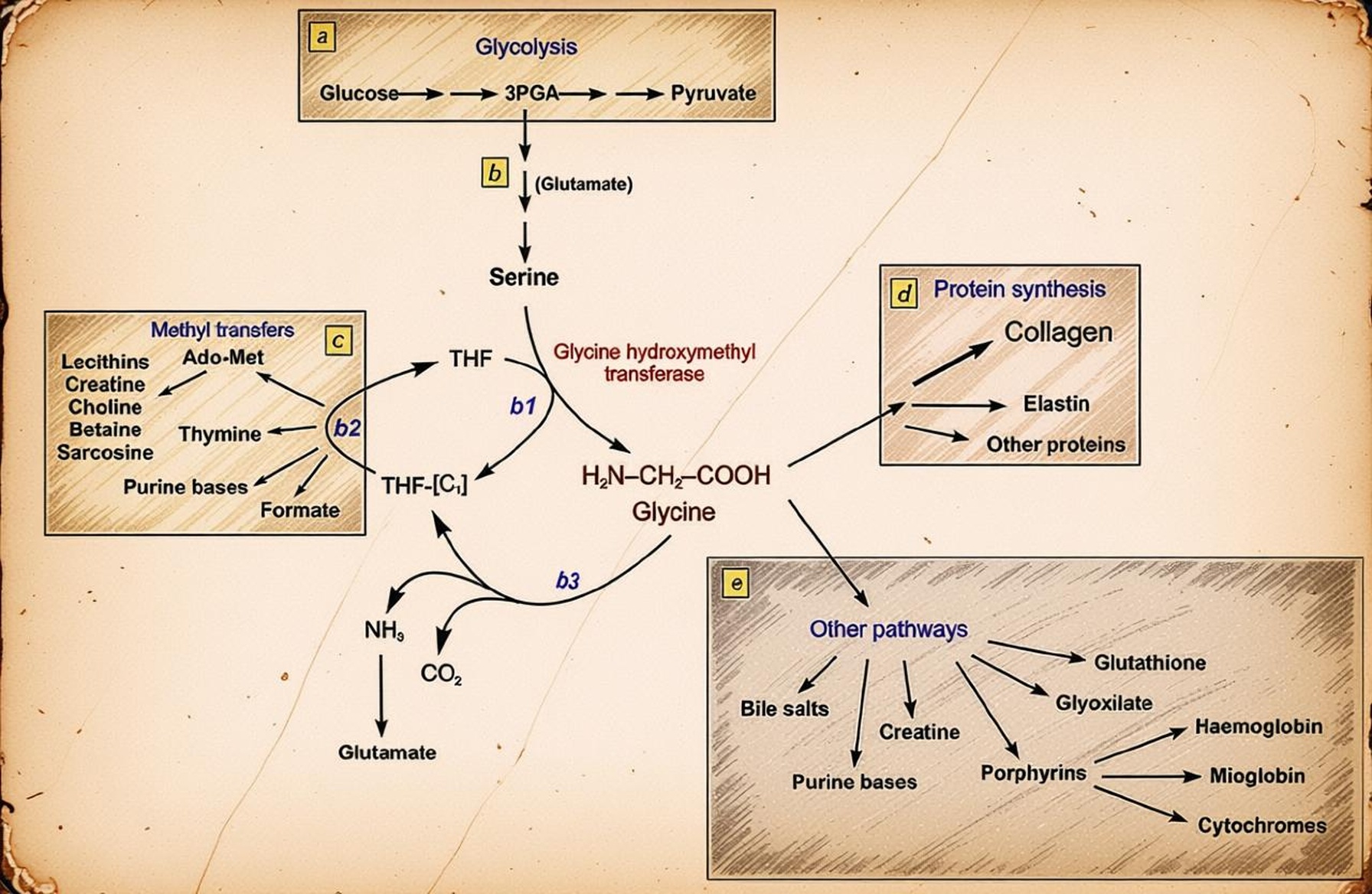
The paradox lies in glycine’s main synthesis pathway: serine hydroxymethyltransferase (SHMT). This enzyme converts serine into glycine but with a rigid stoichiometry—one glycine for one C1 unit.
That means glycine production is tethered to unrelated one-carbon metabolism (purines, thymine). If the body doesn’t need C1 units, glycine synthesis stalls, even if collagen or glutathione demand is soaring.
2. Structural Integrity and Immune Defense
Glycine makes up every third amino acid in collagen’s triple helix and is one of three aminoacids that make up glutathione (GSH). Without enough glycine, oxidative stress takes hold, aging accelerates, connective tissue weakens, impairing joints, skin, and even the extracellular matrix (ECM)—our first line of defense against pathogens.
A three-year nutritional study (Meléndez-Hevia 2021) showed that 10 g/day supplementation dramatically reduced infections: only 18.8% of the glycine group got sick in year one, versus 93% in controls.
3. Cardiovascular and Metabolic Health
Higher plasma glycine correlates with lower risk of myocardial infarction and coronary heart disease (Quintanilla-Villanueva 2024). Supplementation improves lipid profiles, reduces blood pressure, and enhances insulin sensitivity (Perez-Torres 2016).
Animal studies show glycine attenuates myocardial fibrosis, improves endothelial nitric oxide availability, and prevents pathological hypertrophy.
4. Cytoprotection and Antioxidant Defense
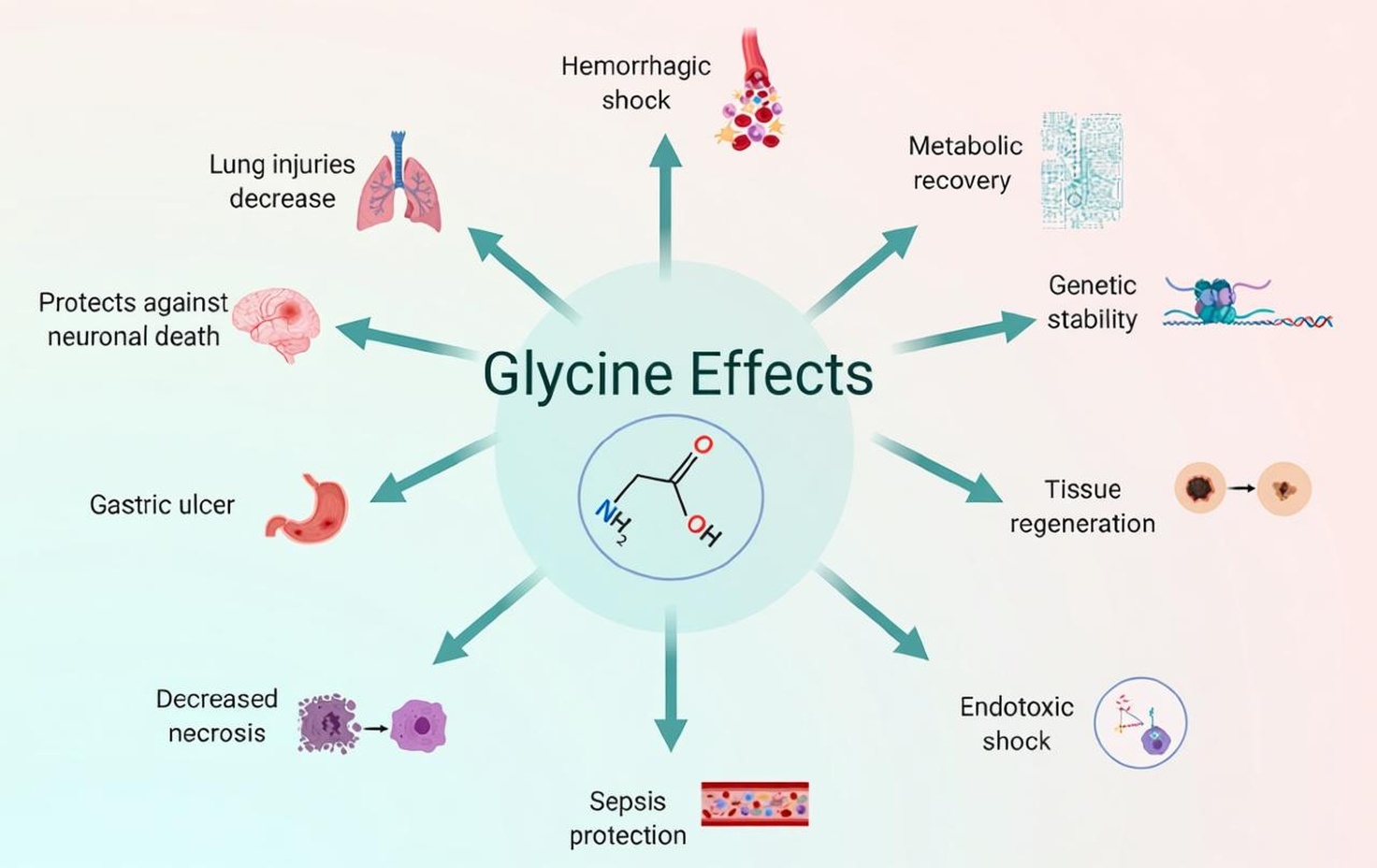
Glycine protects organs from ischemia-reperfusion injury, toxins, and oxidative stress. It activates glycine-gated chloride channels (GlyR) on immune and endothelial cells, blunting calcium influx and inflammatory cascades.
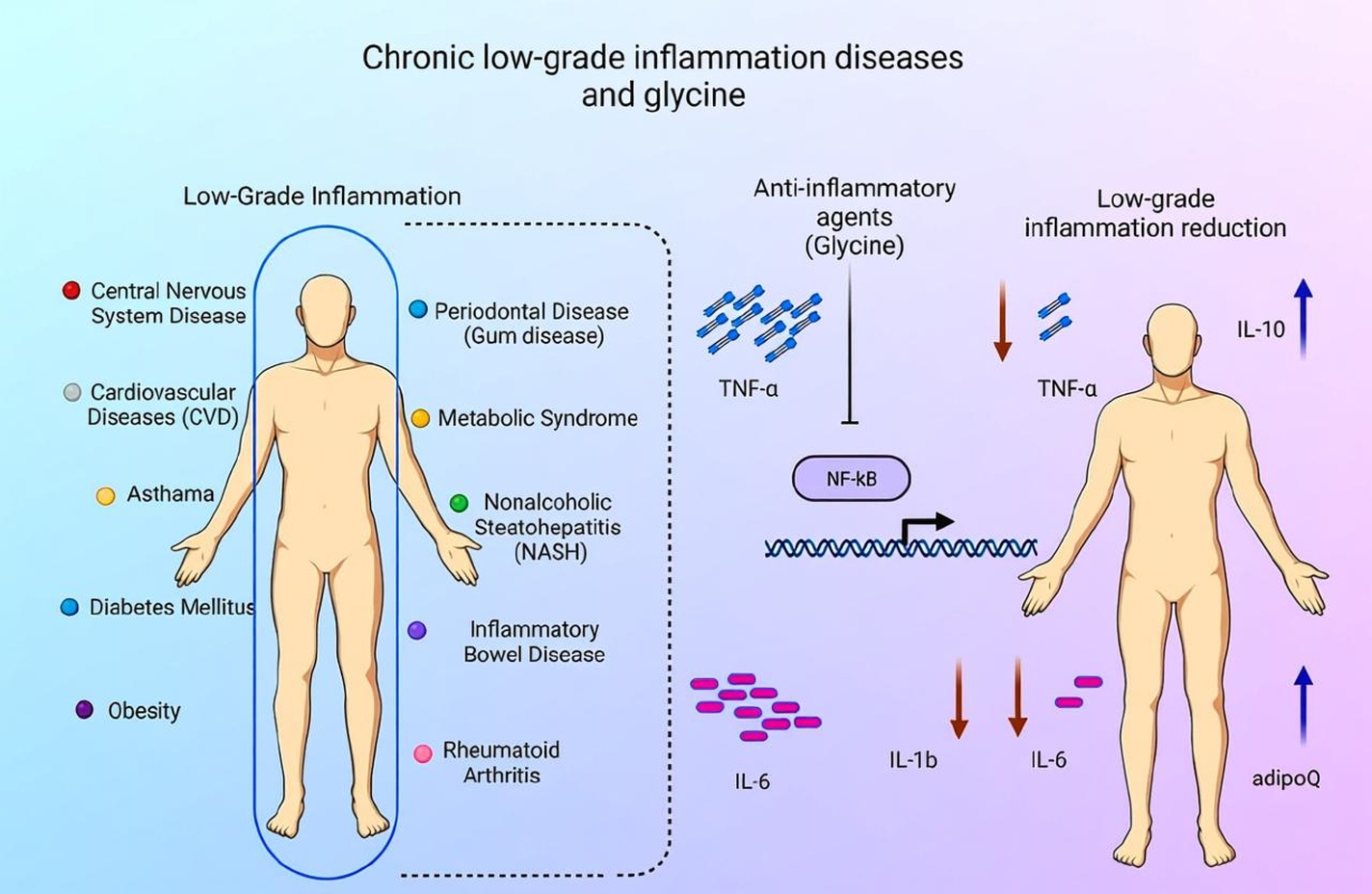
It is also a precursor for glutathione (GSH), the body’s master antioxidant, along with Cysteine and Glutamine. Supplementation of Glycine, especially in combination with NAC, restores depleted GSH pools in aging, diabetes, and inflammatory illness. This combination has been nicknamed GlyNAC, and can be administered as separate supplements.
5. Neurological Function and Recovery
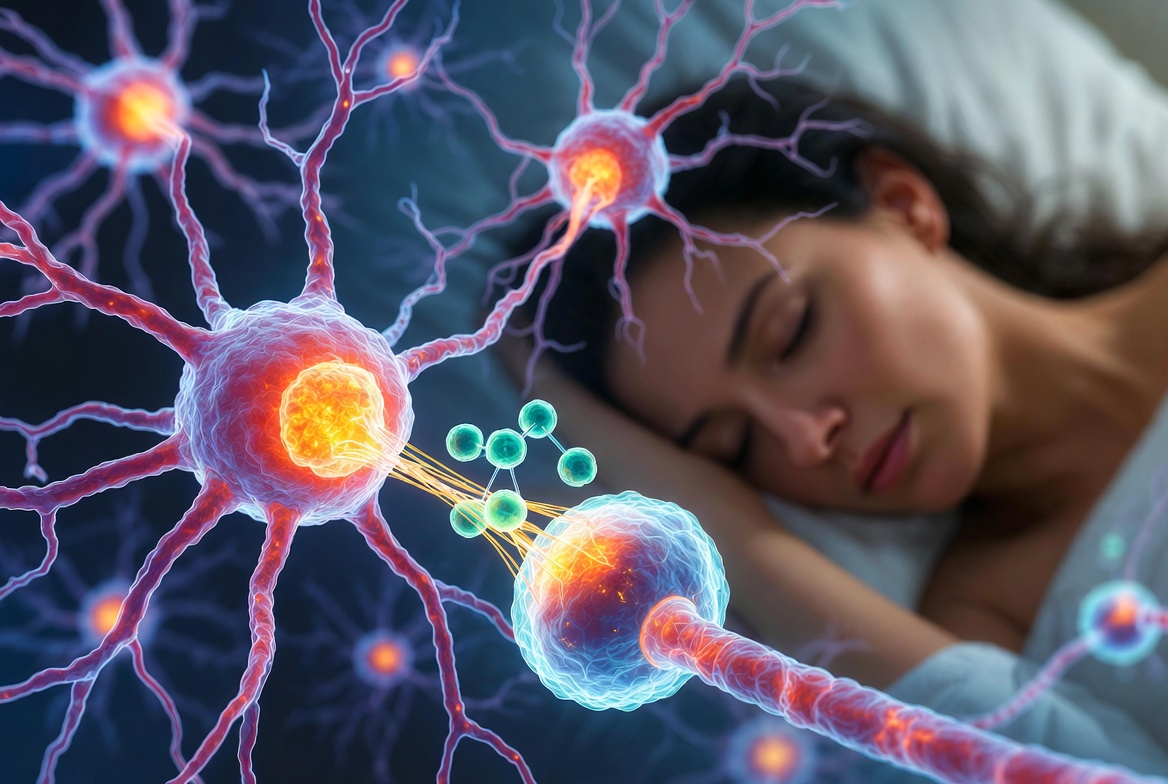
Glycine acts as an inhibitory neurotransmitter and NMDA receptor co-agonist. Supplementation improves sleep quality: 3 g before bed reduces sleep latency and daytime fatigue (Ramos-Jiménez 2024).
It also supports muscle metabolism via creatine synthesis, mTORC1 activation, and protection against muscle wasting.
Conclusion: Rethinking “Non-Essential”
Glycine is not just a simple building block. It is a master regulator of structural integrity, immune defense, cardiovascular health, cytoprotection, and neurological function.
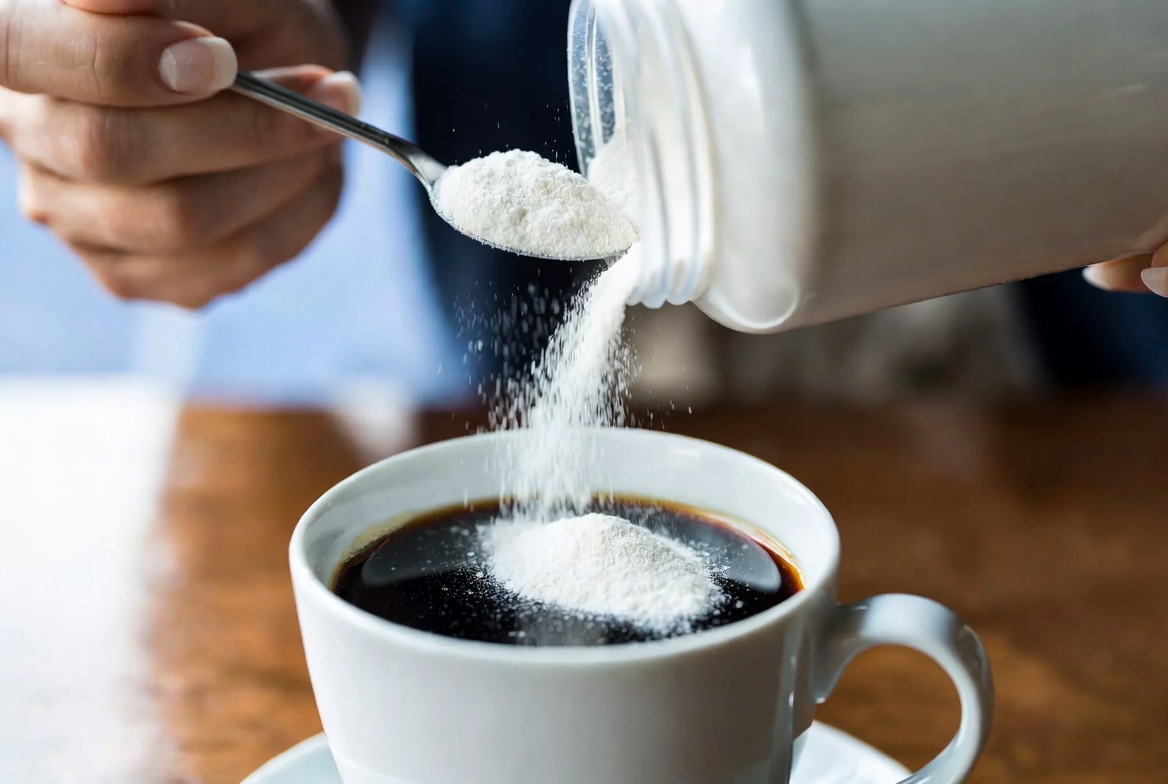
Its naturally-sweet taste makes it easy to take in your favorite drink, such as coffee, tea, or a morning shake, and it’s also great for diabetics as it doesn’t increase blood glucose. Two to three teaspoons per day can help you meet your needs for this amino-acid that is absolutely critical for so many aspects of your health.
The evidence is clear: our bodies face a chronic glycine deficit. Supplementation—safe even at high doses—offers a compelling strategy to close this metabolic gap and unlock glycine’s full therapeutic potential.
📚 References
- Abdul-Razak, M., Begum, P. S., Viswanath, B., & Rajagopal, S. (2017). Multifarious beneficial effect of nonessential amino acid, glycine: A review. Oxidative Medicine and Cellular Longevity, 2017, 1716701.
- Meléndez-Hevia, E., De Paz-Lugo, P., Cornish-Bowden, A., & Cárdenas, M. L. (2009). A weak link in metabolism: the metabolic capacity for glycine biosynthesis does not satisfy the need for collagen synthesis. Journal of Biosciences, 34(6), 853–872. https://doi.org/10.1007/s12038-009-0100-9
- Meléndez-Hevia, E., de Paz-Lugo, P., & Sánchez, G. (2021). Glycine can prevent and fight virus invasiveness by reinforcing the extracellular matrix. Journal of Functional Foods, 76, 104318.
- Perez-Torres, I., Zúñiga-Muñoz, A. M., & Guarner Lans, V. (2016). Beneficial effects of the amino acid glycine. Mini-Reviews in Medicinal Chemistry, 17(1), 15-32.
- Quintanilla-Villanueva, G. E., Rodríguez-Delgado, M. M., Villarreal-Chiu, J. F., Blanco-Gámez, E. A., & Luna-Moreno, D. (2024). The role of amino acid glycine on cardiovascular health and its beneficial effects: A narrative review. Journal of Vascular Diseases, 3(2), 201–211.
- Ramos-Jiménez, A., Hernández-Torres, R. P., Hernández-Ontiveros, D. A., Ortiz-Ortiz, M., López-Fregoso, R. J., Martínez-Sanz, J. M., Rodríguez-Uribe, G., & Hernández-Lepe, M. A. (2024). An update of the promise of glycine supplementation for enhancing physical performance and recovery. Sports, 12(10), 265.